

Inhalt des Beitrags
Botox treatments are a popular aesthetic option for wrinkle treatment, but sometimes the effect of Botox doesn’t seem to last as long as expected. Many wonder why Botox doesn’t show its full effect or why it wears off faster than for others. This expert article sheds light on the various reasons why the effect of Botox can diminish and what you can do about it.
Why Botox doesn’t last
Possible reasons for insufficient effect
There are various reasons why Botox may not show the expected efficacy. One possible explanation and other factors are:
| Factor | Impact on efficacy |
|---|---|
| Patient’s metabolism | Rapid breakdown of the active ingredient botulinum toxin |
| Dosage | Too low a dose leads to weak or short-lived effect |
| Injection technique | Insufficient technique by the doctor prevents full effect |
| Botox preparation | A lower quality botulinum is used. |
In rare cases, the body can form antibodies against the neurotoxin, which can affect the efficacy of Botox.
Individual differences in response
Everyone reacts differently to Botox. Individual differences in metabolism and muscle structure can influence the duration and efficacy of Botox. Some people break down Botox faster than others, causing the effect to not last as long. The strength of facial muscles also plays a role: with very active musculature, the effect can diminish more quickly. Therefore, it is important that an experienced doctor customizes the treatment to achieve the desired effect and maintain naturalness.
What role do the quality and application of Botox preparations play in the duration of effect?
Improper treatment can also lead to Botox not showing the desired effect. Errors in injection technique, such as incorrect placement or depth of injection, can impair efficacy. It is therefore crucial to be treated by an experienced doctor who has sound knowledge of facial anatomy and correct dosage. Pre-treatments such as peels shortly before Botox treatment can also influence the result. A detailed consultation in advance is therefore essential to minimize side effects and achieve the best possible durability. Book a consultation appointment for your Botox treatment here, and we will clarify all open questions and possibilities.
Duration of Botox effect
Normal durability
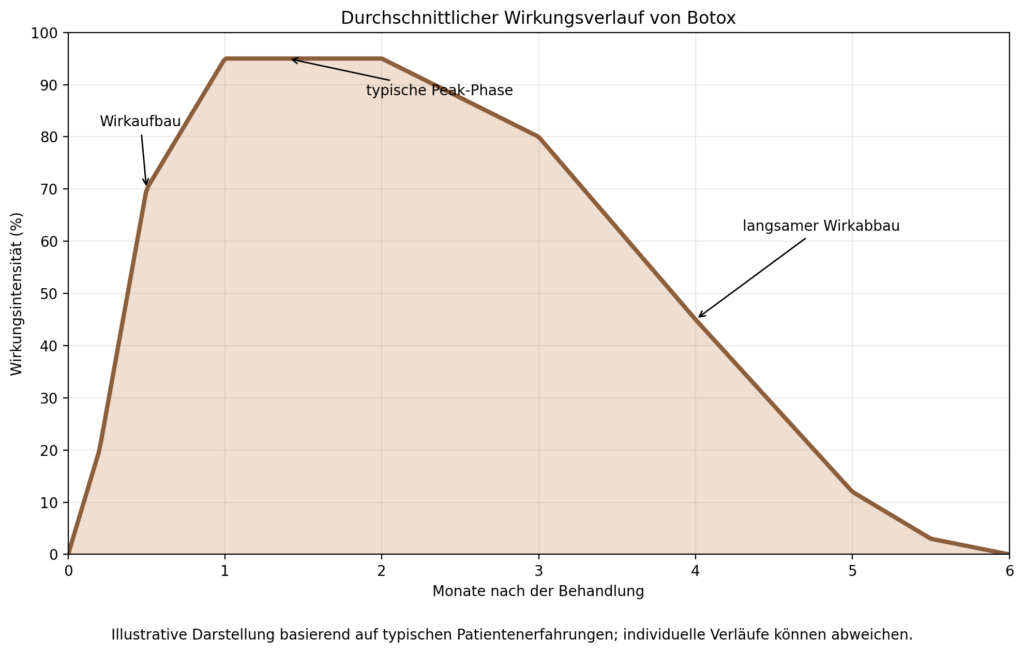
The normal duration of Botox effect is typically between three and six months. Although Botox is an effective method for wrinkle treatment, the effect is temporary. The injected botulinum toxin relaxes the treated facial muscles, which reduces wrinkles. However, the body breaks down the toxin over time, gradually restoring muscle activity and making wrinkles visible again. Many patients therefore opt for regular Botox treatments to maintain the aesthetic effect. The frequency of treatments depends on the individual metabolic rate and the desired effect. Our experienced doctors at Aesthetiqua can provide a personalized recommendation to achieve the best possible durability.
Aftercare and maintenance
Proper aftercare and maintenance after a Botox treatment can help optimize the durability and efficacy of Botox. Immediately after the injection, some things should be observed, such as:
- Avoid direct sun exposure and intense physical exertion, as this can affect the distribution of the botulinum toxin.
- Avoid certain skincare products or peels in the first few days after treatment to minimize potential side effects.
A healthy lifestyle, sufficient sleep, and a balanced diet can also help positively influence metabolism and extend the duration of Botox’s effect. Regular follow-up appointments with the treating physician are important to monitor progress and make adjustments if necessary.
What can I do to make Botox last longer?
Preparation for treatment
To ensure optimal Botox efficacy, careful preparation for the treatment is crucial. This includes a detailed consultation with an experienced doctor, where the patient’s individual needs and expectations are discussed. The doctor should analyze the facial muscles to determine the optimal injection technique and dosage. Before treatment, certain medications that affect blood clotting should be avoided to minimize the risk of side effects. Avoiding alcohol and nicotine can also positively influence the durability and outcome of the Botox treatment. Good preparation helps achieve the full effect and increase patient satisfaction, ensuring Botox works.
Aftercare to extend the effect
Proper aftercare plays an important role in extending the duration of Botox’s effect and optimally caring for the skin. Immediately after the injection, one should avoid strenuous physical activity and sauna visits, as this can affect the distribution of the botulinum toxin. It is advisable to gently move the treated facial muscles in the first few hours after Botox treatment to promote the absorption of the active ingredient. Direct sun exposure and solarium visits should also be avoided to prevent unnecessary strain on the skin. Gentle skincare products that do not contain irritating ingredients are ideal for soothing and moisturizing the skin. Through proper aftercare, patients can help Botox last longer and maintain the aesthetic effect.
Regular follow-up appointments
Regular follow-up appointments with the treating physician are essential to monitor the progress of the Botox treatment and make adjustments if necessary. During these appointments, the doctor can assess the efficacy of Botox and determine whether the desired effect has been achieved. If the effect of Botox diminishes or is insufficient, the dosage can be adjusted for the next treatment. In addition, possible side effects can be detected and treated early. Follow-up appointments also offer the opportunity to clarify individual questions and learn about further treatment options, such as hyaluronic acid fillers. Regular check-ups ensure that Botox treatments deliver the desired results long-term and maintain the naturalness of the face.
Frequently asked questions on the topic: Why isn't my Botox working properly?
Why doesn't my Botox treatment last 2 months?
There are several reasons for this: individual anatomy and skin structure, strong mimic involvement of the treated muscles, varying blood circulation at the injection site, as well as the type and amount of botulinum toxin A (Botox preparation) administered. An overly short or imprecise treatment plan and variations in the practitioner can also reduce full efficacy. An individual medical/specialist consultation helps clarify causes.
Can my body develop resistance to botulinum toxin type A?
Yes, in rare cases, immune resistance can develop, especially with frequent, high doses due to the formation of neutralizing antibodies. However, this is uncommon in aesthetic medicine with standard doses. Switching Botox preparations or longer breaks between treatments can be discussed.
Does previous hyaluronic acid or skin boosters affect the effect of Botox?
Generally, hyaluronic acid fillers or skin boosters do not directly affect botulinum toxin’s effect, as long as injections are properly separated and placed at the correct injection site. Nevertheless, the combination of filler and Botox can alter the overall aesthetic; discuss the sequence and interval with one of our treating doctors at Aesthetiqua.
How important is the choice of practitioner for the duration of the Botox effect?
Very important. The anatomy of the treated muscles, exact injection site, and dosage significantly determine effectiveness. A doctor in aesthetic medicine can adapt the treatment plan to individual needs and thus ensure full efficacy for longer.
Can skincare or retinol affect Botox?
Skincare products like retinol or chemical peels do not directly affect the effect of botulinum toxin. However, they can influence skin structure and healing after the injection. Inform your doctor about active skin treatments so that the optimal time for Botox injection can be planned.
How long does it usually take for Botox to work and how long does the effect last?
Normally, it usually takes 3–14 days for the first effects to be visible, with full efficacy typically occurring after about two weeks. The duration depends on the treated muscles, dosage, and individual factors; 3–6 months are common, but some patients notice longer or shorter durations of effect.
What behaviors and factors influence the durability of Botox (e.g., alcohol, exercise, UV protection)?
Increased blood circulation, active metabolism, or regular intense exercise can accelerate the breakdown of botulinum toxin. Smoking or certain medications can also affect the duration of effect. Discuss lifestyle factors with your practitioner.
What can I do if Botox doesn't work or only works weakly?
Schedule a follow-up with your treating doctor. Possible steps include reviewing the diagnosis (e.g., whether the correct muscle target was treated), adjusting the dose and injection site, switching Botox preparations, or alternative measures such as hyaluronic acid, other aesthetic medicine options, or surgical consultation. An individual consultation clarifies whether resistance is present.
What can I do if Botox doesn't work or only works weakly?
Schedule a follow-up with your treating doctor. Possible steps include reviewing the diagnosis (e.g., whether the correct muscle target was treated), adjusting the dose and injection site, switching Botox preparations, or alternative measures such as hyaluronic acid, other aesthetic medicine options, or surgical consultation. An individual consultation clarifies whether resistance is present.




 Lip Augmentation
 The Russian Lips (Doll-Lips) Technique
 Effective Non-Surgical Rhinoplasty
 Cheek Augmentation – Cheekbone Injections
 Remove Dark Circles, Tear Troughs & Eye Bags
 Chin Augmentation
 Jawline Treatment
 Nasolabial Folds
 Remove Forehead Wrinkles
 Remove Frown Lines
 Remove Crow’s Feet
 Reduce Neck Wrinkles
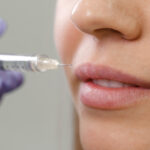 Lip Flip with Botox®
 Remove Bunny Lines
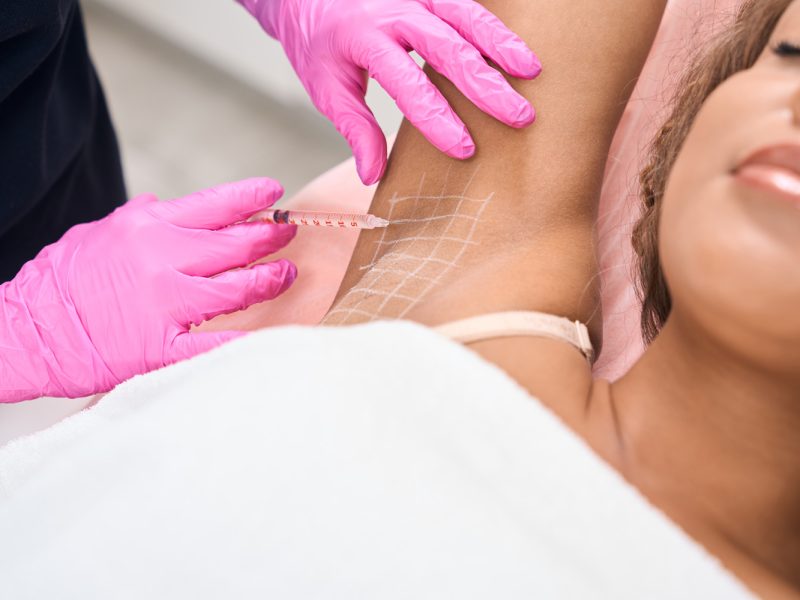
 Botox® Treatment against Sweating
 Botox® for Teeth Grinding
 Tattoo Removal with Laser
 Remove Permanent Makeup
 Permanent Laser Hair Removal
 Fat-Away Injection
 Hylase | Dissolve Hyaluronic Acid
 Polynucleotide Treatment | PhilArt